
Flute players rarely perform with in-ear monitors. Most of the time we play fully acoustic, or into a standing mic. In an all acoustic environment with a generally calm audience the naked ear works best; but if you find yourself on stage with amplified instruments, backing tracks and an enthusiastic audience, you might love a good pair of in-ears. There isn't much information out there on flute players using in-ears, so it seemed worthwhile to write my experience...
In-ear monitors are basically just a set of ear buds you wear while performing. They focus on blocking out ambient noise so you can hear a balance of yourself and other musicians on stage. They also protect your hearing when performing with amplified instruments. My first experiences with in-ear monitors were with generic sets while playing with groups like Akara at festivals. With Akara, the acoustic instruments were amplified while we played with backing tracks. It was always loud and fantastic fun, and so was the audience. Using in-ear monitors allowed me to hear the backing tracks and other musicians while protecting my hearing.
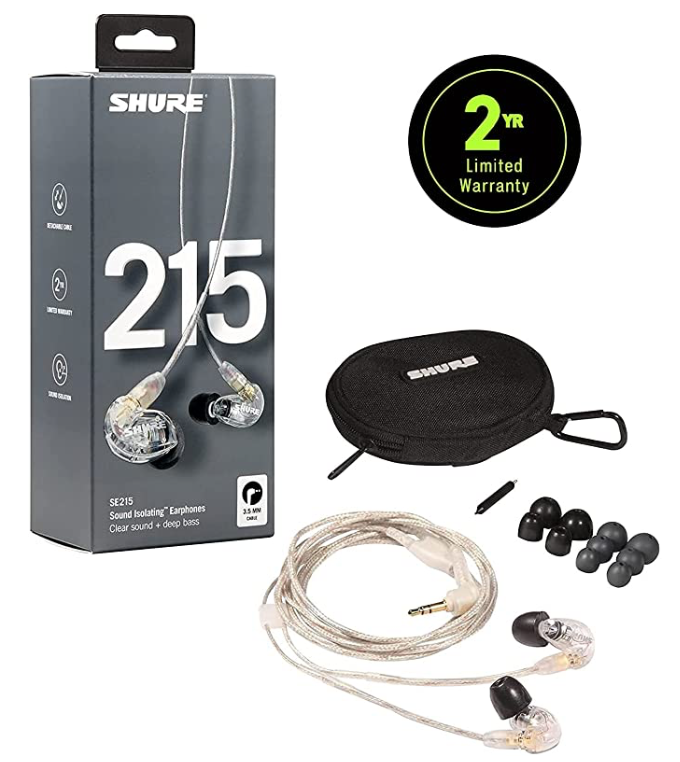
Shure makes a perfectly good set of generic in-ear monitors for around $100. They look like a set of athletic ear-buds you might plug into your phone to listen to music. Generic means they are built to fit anyone. They work just fine, but if you’re using them a lot and have a discerning ear, I think you’ll be much happier with custom pair. Playing with Justin Hayward was my first experience with custom in-ear monitors, and now a couple tours later they have become an important tool.
Custom pairs are made from a mold of your ears so they can be made to perfectly fit you. The perfect fit means they don't fall out, they block outside noise better, and what you hear sounds even better. The pair I wear during Justin Hayward’s concerts were made for me by JH Audio. The sound is crystal clear, rich and warm. Of their several models, the one I picked is made for vocalists. I find voice and flute have physical similarities. I sing background vocals as well, so this combination worked out perfectly for me. 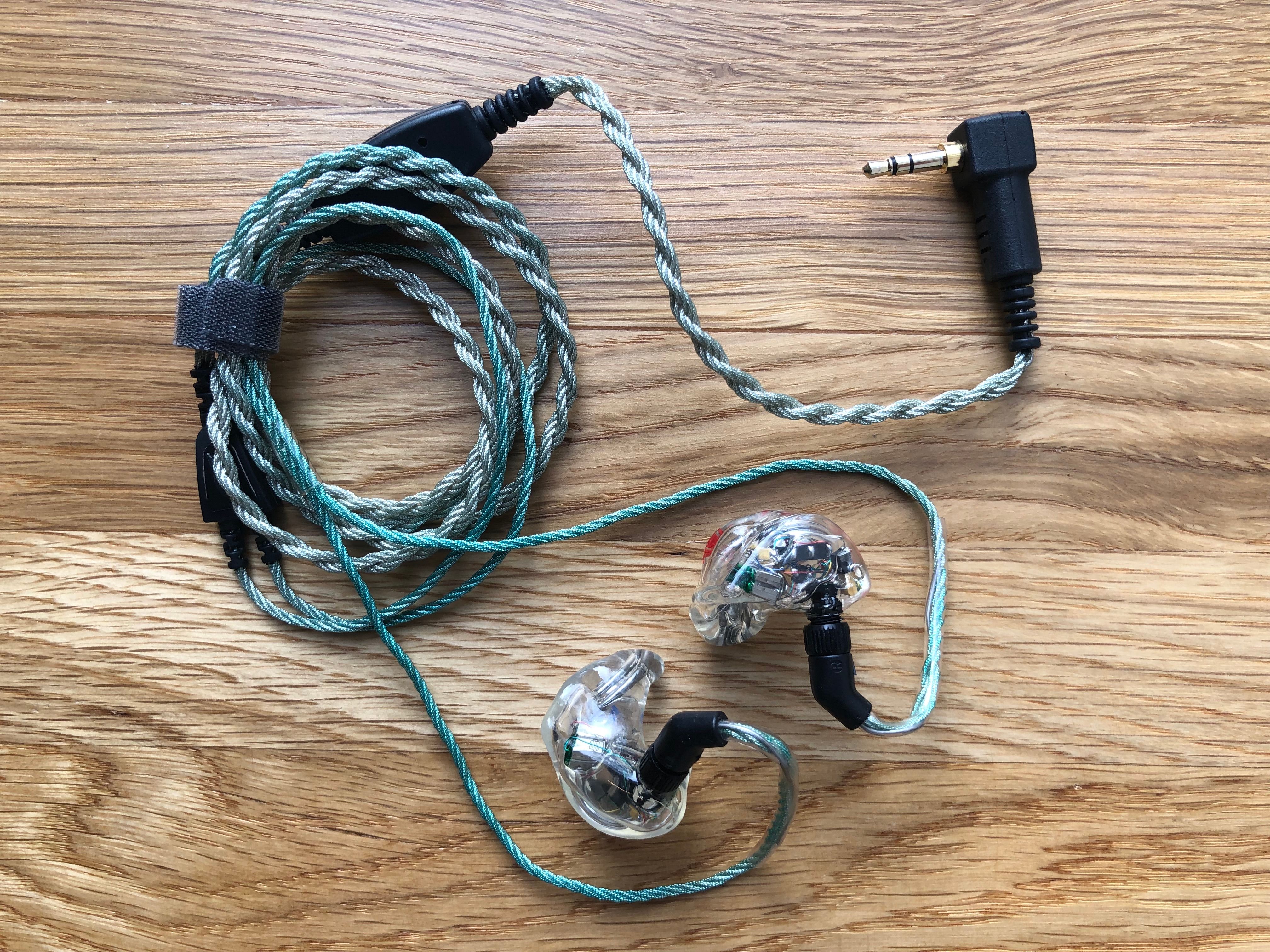
What are other advantages of wearing in-ear monitors besides protecting your hearing and a basic ability to hear what’s happening on stage? First thing for me, is that you can get the most accurate and in-time sound this way. When playing with other electric or amplified instruments, it’s the best way to hear timing.Your naked ears can play tricks on you. Without a good monitor, your ears are likely to hear the music around you just a scosh late (after the sound has bounced around the stage and hall). If you hear things even the tiniest bit off, you’ll play the tiniest bit off, and that’s not going to cut it.
Also, the front of house can custom mix what you need to hear most, which is sometimes different from song to song. Say for a particular song I need to play something perfectly in time with a tambourine from across the stage and it's fairly rhythmically complex. The F.O.H. can turn the tambourine up in my ears during that song so I can hear it well enough to play in sync.
Another favorite advantage for me is how in-ears can help when singing background vocals. I can ask for other vocalists to be turned up in my ears when I’m singing. This really helps with my ability to sing in time and in tune, also to hear well enough to match the quality of my voice to others for a good blend.
One more fun thing I have to mention is what I call “the voice of god.” I don’t know what others call it, that’s just my quirky name for it. Every now and then Steve Chant (the F.O.H. on Justin Hayward’s concerts) talks to my ears during a concert if he needs me to change something. It might be to adjust the lapel mic on my flute, or ask me to move to a different spot on stage for better acoustics. Each stage and each hall is different; it’s fantastic to have that communication while playing so adjustments can be made. It’s also just pretty cool to be mid concert and hear instructions speaking to you in a British accent (the god voice during a Justin Hayward concert is appropriately British). Having the ability to hear things the audience can't hear can also apply to a click or count-in to a backing track as well. I see these all as great tools that can help make great music.
It’s not all fun and games, the adjustment period when working with in-ears can be fairly difficult. Even with all the praise I have for the quality of sound and advantages of in-ears, they aren’t your naked ear (the organic sound most of us trust the most). It was an adjustment for me at first. Sometimes a gorgeous tone will ring back in my ears inspiring me, and sometimes it sounds like someone shoved thick socks in my ears and asked me to be inspired to play. Learning to sort out what you’re doing vs. what you’re hearing takes time.
To bridge that gap, some people only use one ear monitor and leave the other ear to hear things naturally. I’ve read this is really bad for your long term hearing (you can look up Binaural Loudness Summation if you want to get in deep with why it’s bad for your hearing). Of course I’ve tried using only one ear monitor, and for a while I thought I preferred it. At first it seems like a good balance of your natural ear and the monitor sound. However, to me what matters most is that I have an accurate representation of what the audience is hearing and what the other musicians are doing. Eventually I gave in to wearing the ears fully, and I’m glad I did. Beyond wanting to keep my hearing as I get older (if that isn’t incentive enough), I found that the flute tone that I hear when only using one ear monitor changes more drastically from venue to venue and (even from sound check to the live show) than if I commit to both ears in. Those variations each performance left me neurotic trying to sort out my "true" sound from the hall sound, and from the sound that is reflected back to me in my monitor. When using both in-ears, I found a better baseline each night as I learned to balance my trust in the feel and vibrations of my tone, independently from what I hear.
I know what it feels like to produce my best sound and that feeling is what is consistent in each performance. In the absence of being able to hear your raw sound, your reliance on feeling your sound has to compensate. Julie Ragins was the first to mention this idea to me and I think she is very right. When you really get down to it, what is the raw sound of the flute anyway? It is always a symbiotic relationship with the acoustic environment. When your ears are fully covered and receiving amplified feedback of your tone, it’s just another acoustic environment you need to learn to trust and manipulate as a musician…a new skill set as you will, and I’m all about new skills!
Hope this was helpful.
-Karmen Gould
Check out these links if you want to dig in further:
-JH Audio: https://jhaudio.com/iem?group=custom
-Shure Generic In-Ear Monitors: https://www.shure.com/en-US/products/in-ear-monitoring
-Read about the difference between ear buds vs. in-ear monitors: https://empireears.com/blogs/news/in-ear-monitors-vs-earbuds-vs-headphones